
The Moment of Arrival
Crossing into Canada, the landscape stretched wide before us—an expanse of golden prairie rolling toward distant mountains. At Maskinonge Overlook, just inside the entrance to Waterton Lakes National Park, we found ourselves in a transition zone where the open plains yield to the rugged peaks of the Rockies.
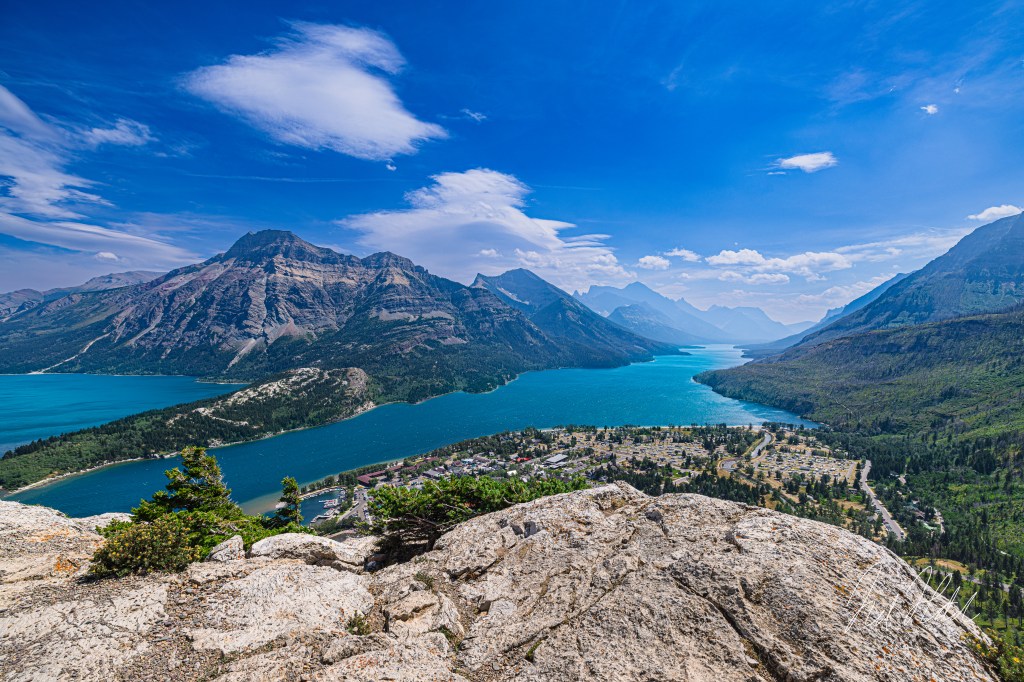
The view here is one of contrast and anticipation. Behind us, the Montana plains; ahead, the rising walls of Waterton’s dramatic landscape. The sky moved swiftly, with restless clouds casting shifting shadows across the grasslands and the calm waters of Maskinonge Lake in the distance.
With my Canon R5 and RF 15-35mm lens, set to auto, I captured the sense of space and depth that defines this place—a land that feels boundless, yet holds the promise of something towering just beyond the horizon. This photo shows the true colors of nature as minimal post processing was performed here.
Maskinonge Overlook: Where Prairie Meets Peaks
This overlook, situated near the park’s entrance, offers a glimpse into one of North America’s rarest landscapes. Waterton is one of the few places where the Great Plains and the Rocky Mountains collide so abruptly, creating a rich ecosystem where prairie grasses, wetlands, and alpine forests exist side by side (Parks Canada, 2023).
The Maskinonge Wetlands, visible in the middle ground of my image, form a vital habitat for migratory birds. This shallow lake and marshy lowlands attract trumpeter swans, pelicans, and bald eagles, making it one of the best birdwatching spots in the park (Nature Conservancy Canada, 2022). The wetlands also serve as a natural filter, feeding the park’s many waterways while supporting an intricate network of plant and animal life.
For centuries, the Maskinonge area was a seasonal gathering place for Indigenous peoples, particularly the Blackfoot Confederacy (Niitsitapi), who relied on these fertile lands for hunting, fishing, and ceremonial practices (Blackfoot Confederacy, 2021). The name “Maskinonge” itself comes from the Cree word for muskellunge, a type of large fish found in the region’s waters.
Today, this overlook remains a place of quiet reflection, a moment of stillness before the grandeur of the mountains takes center stage.
A Landscape Steeped in History
Before Waterton Lakes became a national park in 1897, this land was part of a vast, untamed frontier. Indigenous communities, fur traders, and early explorers all passed through these prairies, leaving behind a history that lingers in the wind.
In 1858, British surveyor John Palliser crossed through this very region during his exploration of the Canadian West. He noted how suddenly the land changed—how the “sea of grass” gave way to towering peaks with almost no warning. His observations would later help shape the boundaries of Waterton Lakes, ensuring that this meeting of prairie and mountains was preserved (Geological Survey of Canada, 2021).
Chief White Calf of the Blackfoot Nation also recognized the importance of this land. In 1895, he negotiated its transfer to the Canadian government, paving the way for the establishment of Waterton Lakes National Park, though the Blackfoot people’s deep connection to the region remains to this day (Parks Canada, 2023).
The Road to the Peaks
From Maskinonge Overlook, the Rocky Mountains rise slowly into view, like a promise unfolding from the prairie. This transition—from wide open grasslands to sheer alpine cliffs—is what makes Waterton so distinct.
As we left the overlook and continued into the park, the landscape seemed to shift with each passing mile. The wetlands faded into the background, replaced by ridges, valleys, and dense stands of aspen and pine. It was as if we had crossed into another world entirely.
But the prairie, with its golden grasses and expansive skies, left its mark. Before the peaks take your breath away, the land here teaches you to pause, to take in the silence, and to appreciate the journey.
Final Thoughts
Maskinonge Overlook is more than just a scenic stop—it’s a place that encapsulates the spirit of Waterton. It’s a gateway where past and present, prairie and peaks, history and nature all converge.
Here, standing between two worlds, you can feel the weight of time, the pull of the horizon, and the whispers of those who came before.
Waterton wasn’t just a destination—it was a story, unfolding from the moment we crossed the border.
If you would like to see more of my work as I add to my growing website, please visit my Gallery. There is lots more to come, stay tuned!
References
• Blackfoot Confederacy. (2021). Blackfoot history and culture. Retrieved from blackfootconfederacy.ca
• Geological Survey of Canada. (2021). Waterton Lakes National Park: A geological history. Natural Resources Canada. Retrieved from nrcan.gc.ca
• Nature Conservancy Canada. (2022). Protecting wetlands in Alberta. Retrieved from natureconservancy.ca
• Parks Canada. (2023). Waterton Lakes National Park: History and Nature. Retrieved from parks.canada.ca
 Neal Hatch Photography